
The List Price Problem
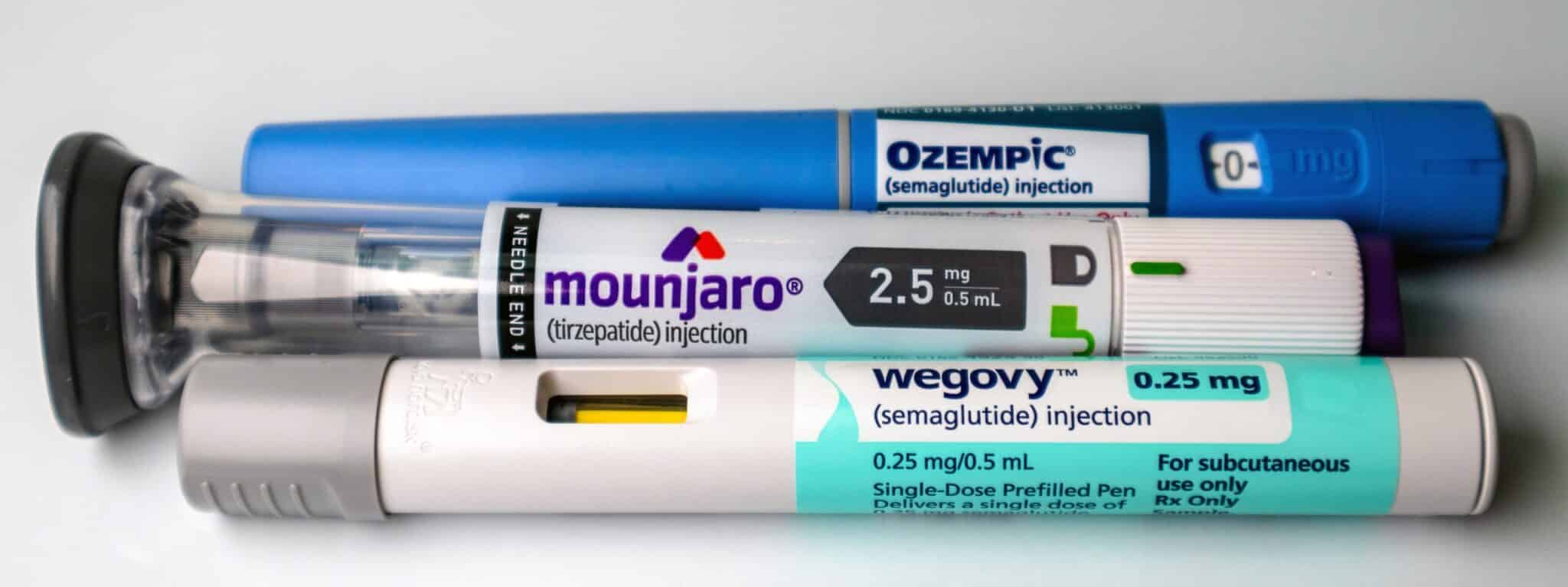
GLP-1 medications are among the most expensive drugs on the market. Without insurance, the monthly cost of drugs like Wegovy or Zepbound can exceed $1,000. Even with Medicare coverage, your out-of-pocket costs depend heavily on which plan you're enrolled in, what tier the drug sits on, and whether you've met your deductible.
How Medicare Part D Cost-Sharing Works
Under Medicare Part D, cost-sharing is structured in phases. In 2026, the Inflation Reduction Act's reforms continue to reshape the landscape:
- Annual deductible: Many Part D plans have a deductible (up to $615 in 2026) before coverage kicks in for most drugs
- Initial coverage phase: After meeting your deductible, you pay your plan's copay or coinsurance for covered drugs
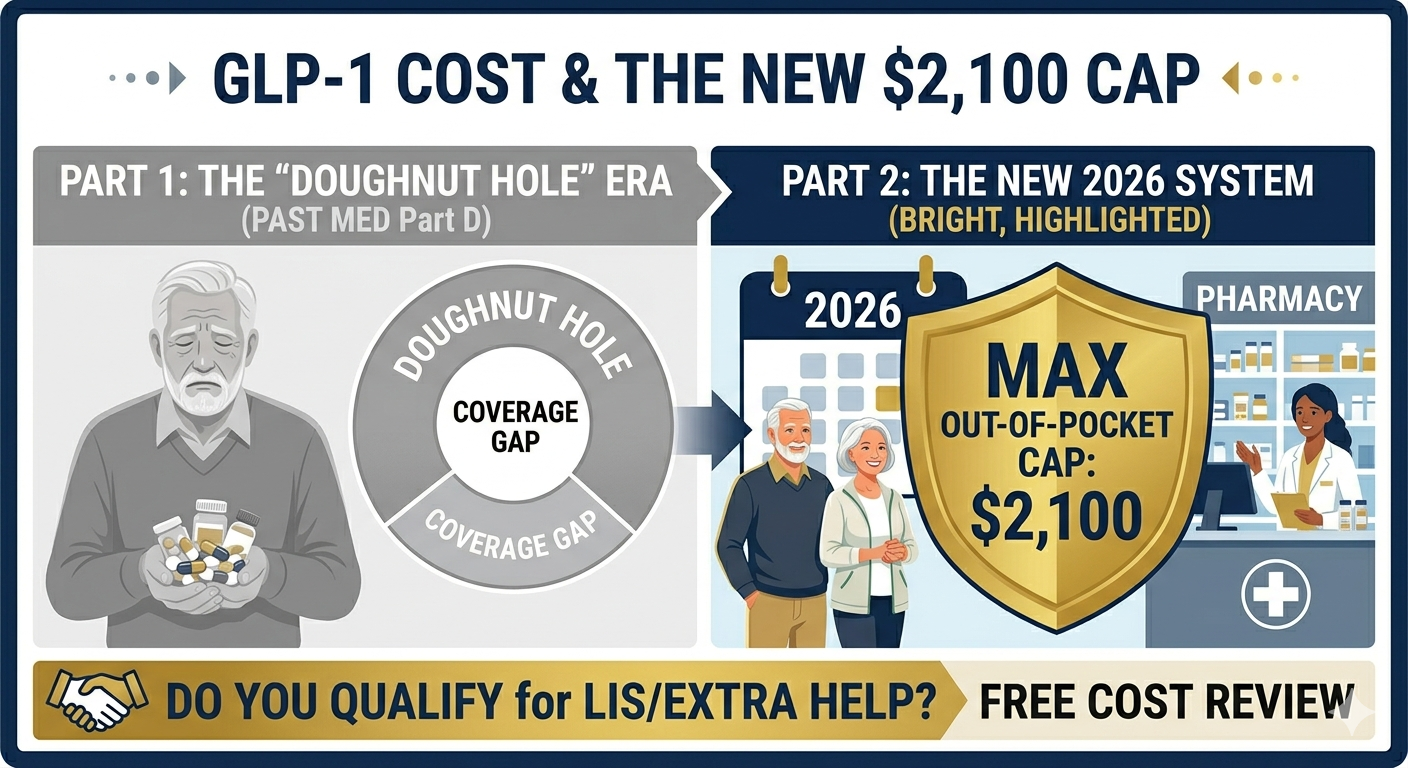
- Catastrophic coverage phase: In 2026, once you've spent $2,100 out of pocket, you pay $0 for the rest of the year
The $2,100 out-of-pocket cap is significant for GLP-1 users, as these drugs can push beneficiaries toward that threshold relatively quickly if they're on a high cost-sharing tier.
The $2,100 annual out-of-pocket cap under Part D is one of the most important protections for Medicare beneficiaries taking expensive specialty drugs like GLP-1 medications.
Drug Tiers and What They Mean for GLP-1 Costs
Part D plans categorize drugs into tiers, with lower tiers costing less and higher tiers costing more. GLP-1 medications are typically placed on:
- Tier 4 (preferred specialty): Common cost-sharing of 25%–33% of the drug's cost
- Tier 5 (non-preferred specialty): Higher cost-sharing, sometimes 50% of cost
With a monthly list price of $1,000+, a 25% coinsurance means roughly $250/month before hitting the catastrophic cap. That's why plan selection matters enormously — and why you should compare plans specifically with your GLP-1 drug in mind.
Low-Income Subsidy (Extra Help) — A Game-Changer
If you qualify for the Low-Income Subsidy (also called Extra Help), your cost-sharing for Part D drugs — including GLP-1 medications — is dramatically reduced. In 2026, Extra Help beneficiaries pay no more than $4.90 per fill for generic drugs and $12.65 for brand-name drugs. Once you reach the $2,100 out-of-pocket cap, you pay $0 for the rest of the year.
You may qualify for Extra Help if your income is below 150% of the federal poverty level. In Arizona, you can also get help through AHCCCS (Medicaid), which may coordinate with Medicare to reduce or eliminate your drug costs if you're a dual eligible.
Qualifying income thresholds for 2026 (approximate):
- Individual: Under $23,940/year
- Married couple: Under $32,460/year
Medicare Savings Programs: Another Layer of Help
Medicare Savings Programs (MSPs) are state programs that help pay Medicare premiums, deductibles, and cost-sharing. In Arizona, AHCCCS administers four MSP levels:
- Qualified Medicare Beneficiary (QMB): Covers Part A and B premiums, deductibles, and cost-sharing — and may extend to Part D costs
- Specified Low-Income Medicare Beneficiary (SLMB): Pays Part B premium only
- Qualifying Individual (QI): Also pays Part B premium
- Qualified Disabled and Working Individual (QDWI): Pays Part A premium for working people with disabilities
If you're enrolled in QMB, providers cannot bill you for Medicare cost-sharing. This protection may extend to pharmacy-dispensed drugs under certain circumstances — particularly if your Part D plan is integrated with a Dual Eligible Special Needs Plan (D-SNP).
The Medicare Prescription Payment Plan
Starting in 2025 and continuing in 2026, Medicare offers a voluntary payment option that allows you to spread your Part D out-of-pocket costs across monthly installments throughout the year. This can smooth out the budget impact of expensive GLP-1 prescriptions rather than front-loading costs at the start of the year when you're working toward your deductible.
Ask your Part D plan or Medicare Advantage plan about enrolling in this payment option if managing cash flow is a concern.
Manufacturer Assistance: A Caution
Many manufacturers of GLP-1 drugs offer copay assistance programs — but these are typically not available to Medicare beneficiaries. Federal anti-kickback regulations generally prohibit manufacturers from subsidizing Medicare beneficiary cost-sharing. Some manufacturers offer separate patient assistance programs for those who meet income requirements, but these programs are limited.
Work with a licensed Medicare agent rather than relying on manufacturer programs as a primary cost reduction strategy.
How to Find the Lowest-Cost Plan for Your GLP-1 Drug
The Medicare Plan Finder at Medicare.gov allows you to enter your prescriptions and compare estimated annual costs across plans in your area. However, navigating this tool can be complex — especially when you're trying to understand specialty tier cost-sharing across dozens of plans.
A licensed Medicare agent can run this analysis for you at no cost, compare total out-of-pocket expenses including premiums, and identify which plans offer the best value for your specific medication regimen.
Disclaimer: Cost figures are estimates based on 2026 CMS data and are subject to change. Actual costs depend on your specific plan, pharmacy, and health status. Always verify details with your plan.