
Understanding the BMI 35 Threshold
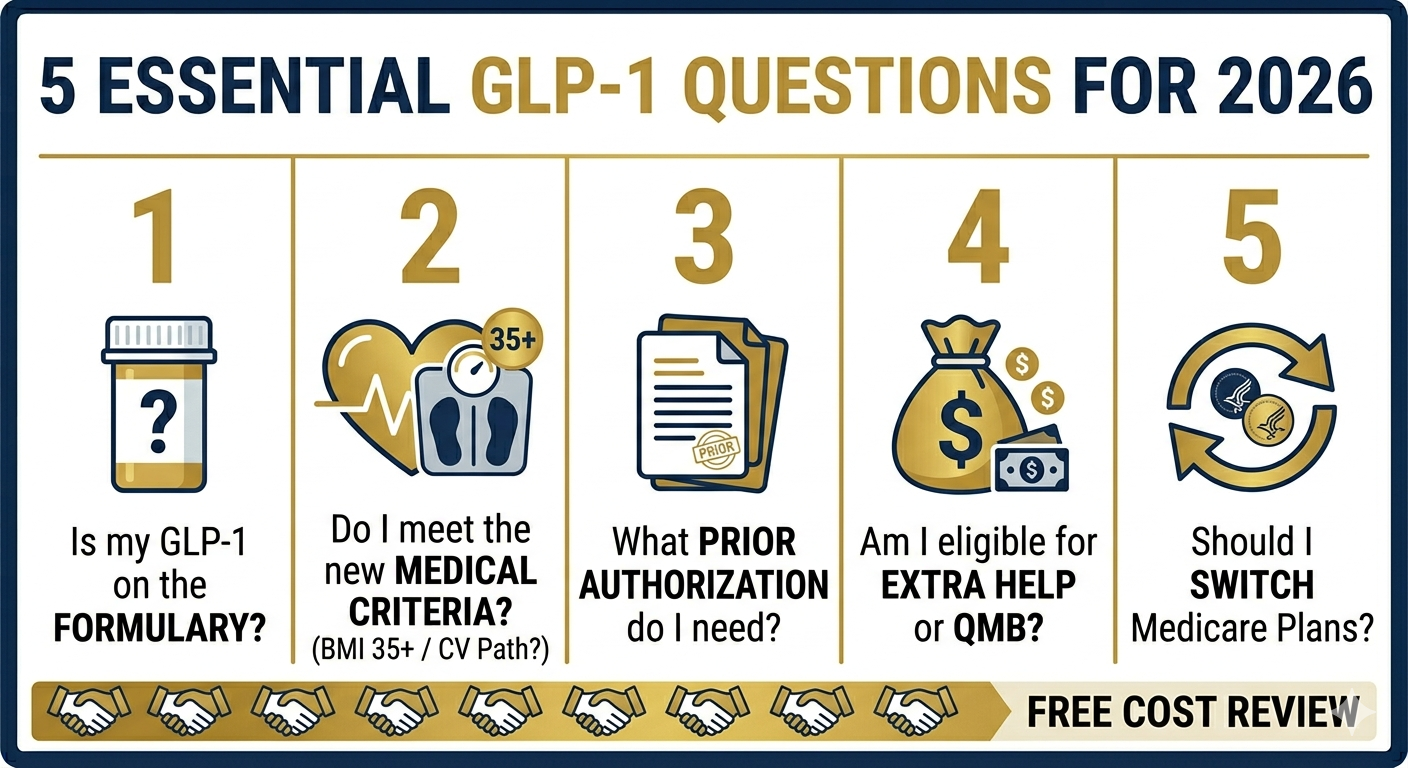
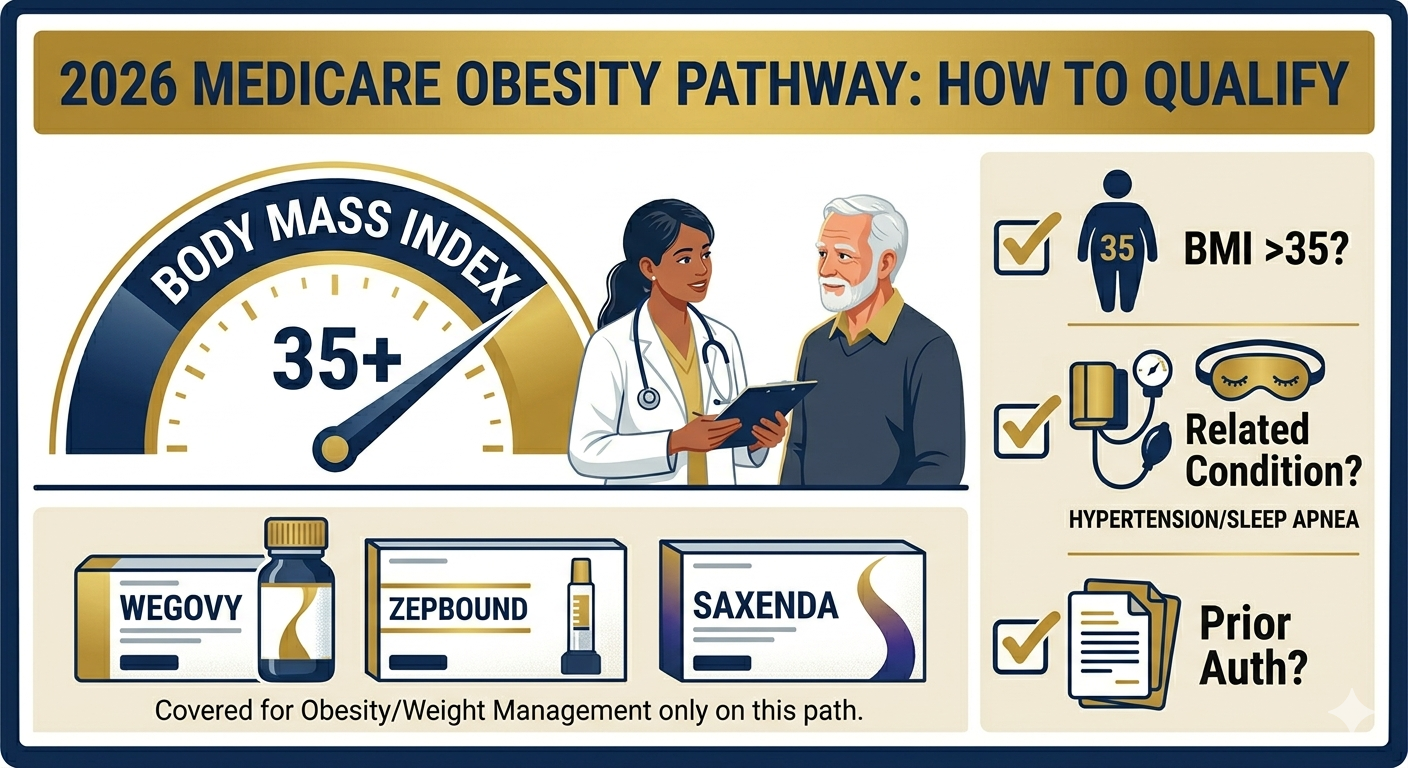
Medicare's new GLP-1 coverage for weight management applies specifically to beneficiaries with a BMI of 35 or higher who also have at least one obesity-related comorbidity. A comorbidity in this context means a health condition that is worsened by or directly related to excess body weight.
Common qualifying comorbidities include:
- Type 2 diabetes or prediabetes
- Hypertension (high blood pressure)
- Obstructive sleep apnea
- Dyslipidemia (abnormal cholesterol or triglyceride levels)
- Nonalcoholic steatohepatitis (fatty liver disease)
- Osteoarthritis related to weight
If you have a BMI of 35 or above and any of the conditions listed above — or others that your physician can document — you likely meet Medicare's qualifying criteria for GLP-1 coverage.
Your BMI must be calculated from height and weight measurements documented in your medical record. A BMI calculator app alone is not sufficient for prior authorization purposes.
How Is BMI Calculated and Documented?
BMI (Body Mass Index) is a number calculated from your height and weight. A BMI of 35 means a person is classified as having Class II obesity, a level associated with significant health risks. Here are some examples:
- A 5'4" person weighing 205 lbs or more has a BMI of approximately 35
- A 5'8" person weighing 230 lbs or more has a BMI of approximately 35
- A 5'10" person weighing 244 lbs or more has a BMI of approximately 35
Your doctor will calculate and record your BMI at your annual wellness visit or any office visit where your weight is measured. It's important to have this documented formally, especially if you're planning to request prior authorization for a GLP-1 drug.
Which GLP-1 Drugs Are Available for Weight Management?
The primary GLP-1 drugs approved for chronic weight management (as opposed to diabetes treatment) that may now be covered under Medicare Part D include:
- Wegovy (semaglutide 2.4 mg weekly injection) — FDA-approved specifically for chronic weight management
- Zepbound (tirzepatide) — a dual GIP/GLP-1 agonist FDA-approved for weight management
- Saxenda (liraglutide 3 mg daily injection) — an older option still on some formularies
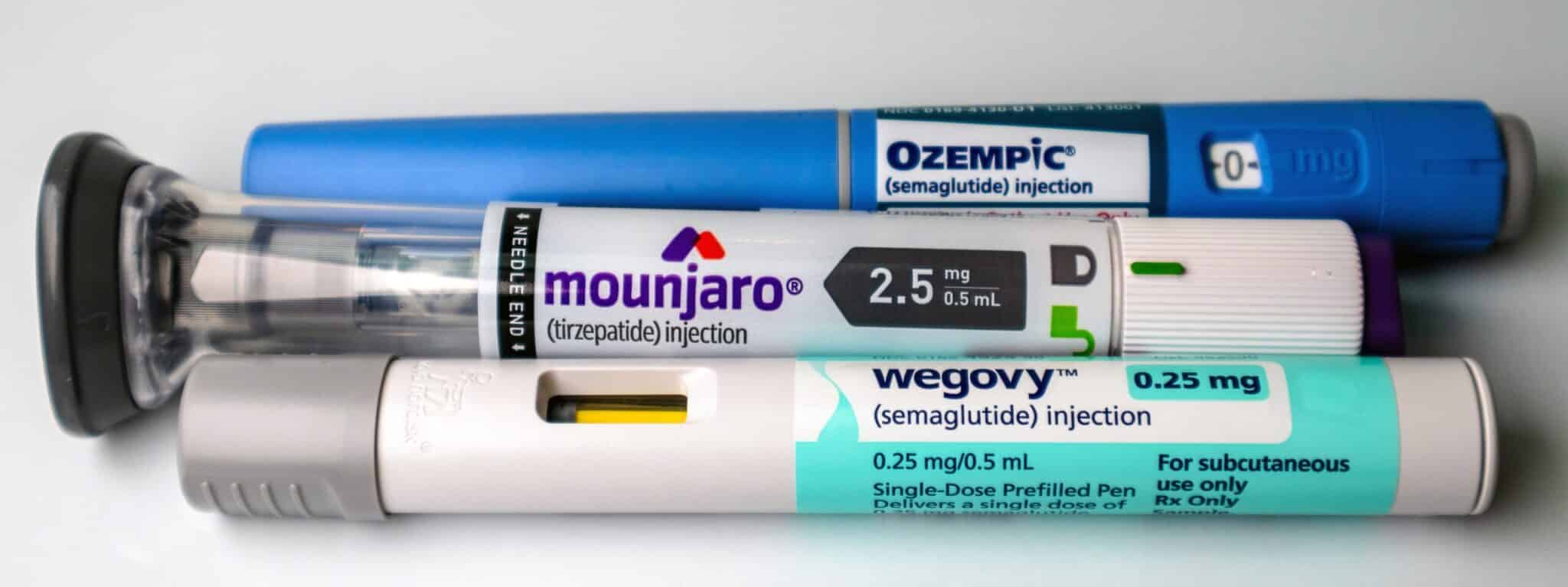
Note that Ozempic and Mounjaro, while widely used for weight loss in practice, are FDA-approved for Type 2 diabetes and may follow a different coverage pathway. Coverage for these drugs will depend on your diagnosis and your specific plan.
Navigating Prior Authorization
Prior authorization (PA) is a process your insurance plan requires before it will cover certain medications. For GLP-1 drugs, prior authorization is common. Here's how it typically works:
- Your doctor submits a PA request to your Part D plan with supporting documentation
- The plan reviews the request against its coverage criteria
- The plan approves, denies, or requests additional information
- If denied, you and your doctor can appeal
The most common reasons GLP-1 prior authorizations are denied include: missing BMI documentation, absence of a documented comorbidity, or the drug not being on the plan's formulary. Working with a proactive physician and a knowledgeable Medicare agent can help prevent and address these issues.
What If My Plan Doesn't Cover My GLP-1 Drug?
Not all Part D plans are equal. Some plans may not include GLP-1 weight management drugs on their formulary at all. If that's the case, you have a few options:
- Request a formulary exception: Ask your plan to cover the drug based on medical necessity
- Appeal a denial: If your PA is denied, you can escalate to an independent review
- Switch plans during enrollment: The Annual Enrollment Period (October 15 – December 7) allows you to move to a plan with better GLP-1 coverage
- Explore manufacturer savings programs: Some drug manufacturers offer copay assistance even for Medicare beneficiaries
Arizona-Specific Considerations
If you live in Maricopa County or elsewhere in Arizona, you have access to a robust marketplace of Medicare Part D plans and Medicare Advantage plans. Many major insurers operating in Arizona — including UnitedHealthcare, Humana, Aetna, Blue Cross Blue Shield of Arizona, and Centene — have added GLP-1 drugs to their 2026 formularies.
A local Medicare agent familiar with the Arizona market can compare plans based on your specific GLP-1 drug, your other prescriptions, and your healthcare providers to find the most cost-effective option.
📞 Need Help? Serving Maricopa County and greater Phoenix. Call MedicareAgentsHelpline.com for a free GLP-1 coverage review. We'll compare plans and help you find the lowest out-of-pocket cost for your medications.
Disclaimer: Coverage eligibility depends on your individual plan and medical documentation. Consult your physician and a licensed Medicare agent for personalized guidance.