If you've read news stories about long-term care insurance policyholders facing steep premium increases, sometimes 50%, 90%, or more, it's easy to assume that buying an LTC policy today comes with the same risk. That assumption misses an important detail most coverage of this topic leaves out: not all long-term care policies are priced or regulated the same way, and the rate increases making headlines are overwhelmingly tied to older policies sold under very different rules.
The Rule That Changed the Math
In 2000, the National Association of Insurance Commissioners (NAIC) revised its Long-Term Care Insurance Model Regulation to include what's known as rate stability provisions. States have adopted it individually since then, and today 41 states have a version of this regulation in place.
The regulation targets one specific problem: the profit incentive behind rate increases. Under the older rules that governed policies sold before a state adopted this regulation, an insurer only had to ensure that 60% of the premiums collected went toward paying claims, leaving 40% available for profit, overhead, and distribution costs. If the company later needed a rate increase, that same ratio applied, meaning the insurer could still profit from the increase.
The rate stability regulation changed that math. For policies sold after a state adopted the regulation, the required claims ratio dropped slightly to 58%, but if the insurer later requests a rate increase, that ratio jumps to 85%. In practical terms, that means the vast majority of any rate increase has to go toward claims and customer service, not company profit. Insurers can no longer treat a future rate increase as a source of additional earnings.
Why This Actually Worked
Removing the profit incentive changed how insurers approached pricing from the very beginning. Instead of pricing a policy competitively low and planning to correct it later with a rate increase, insurers now had a strong reason to price conservatively and accurately from day one, since a future increase would no longer pad their bottom line.
The results show up clearly in the data. According to figures compiled by LTC Shop and reported by InvestmentNews, the average cumulative rate increase since 2001 on policies covered by the rate stability rules is 31%. On policies not covered by the rules, meaning older policies sold before a state adopted the regulation, that average jumps to 55%. The median increase tells a similar story: 20% for policies under the newer rules compared to 46% for policies without that protection.
What This Means for You
If you're comparing a long-term care policy today to the horror stories you've read about, it's worth asking a simple question: was that policy sold before or after the state's rate stability regulation took effect? The answer changes the picture significantly. A policy sold under the current rules is priced under a fundamentally more disciplined standard, with real regulatory teeth behind it if a rate increase is ever requested.
This doesn't mean rate increases are impossible today. It means the risk looks very different than it did for policies sold decades ago, and comparing the two tells an incomplete story.
One More Thing Worth Knowing
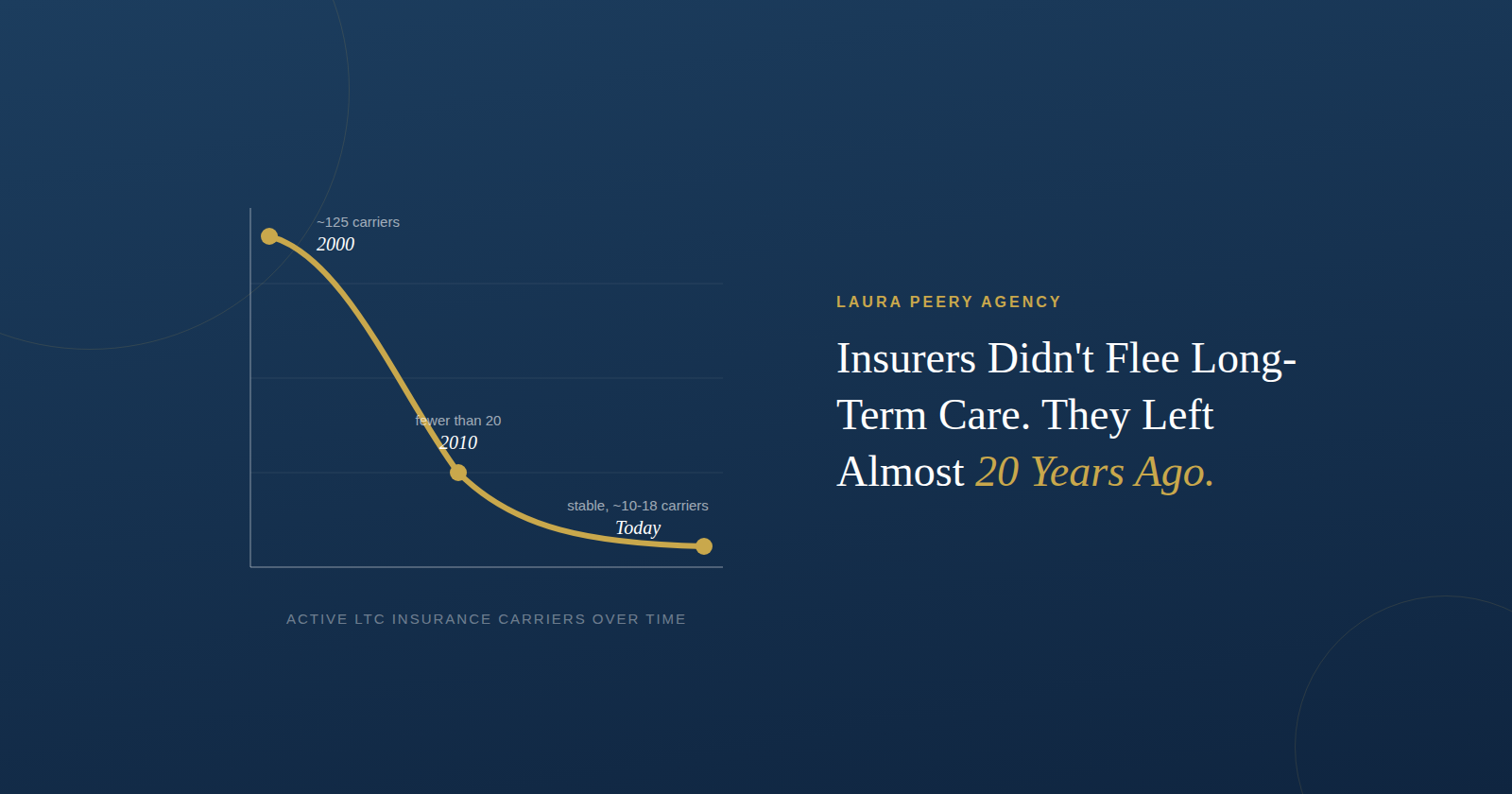
Despite the narrative that insurers are abandoning this market, in most states there are still more companies selling long-term care insurance than there are selling standalone disability insurance. This is a smaller market than it was 25 years ago, but it is not a disappearing one.
Let's Look at Your Options Together
At Laura Peery Agency, a Ramsey-Trusted Pro team, we help clients understand exactly what they're buying, including how a policy is priced and what protections apply. We'll walk you through the details so you can make a fully informed decision.
Ready to see what long-term care could cost in your situation, and how to plan for it?
📅 Book a free consultation: LauraPeeryAgency.com/book-online
📧 Email us: Laura@LauraPeeryAgency.com | Tom@LauraPeeryAgency.com | Roger@LauraPeeryAgency.com
📞 Call us directly: Laura: (321) 848-3838 | Tom: (321) 917-2521 | Roger: (321) 848-1377
Sources: National Association of Insurance Commissioners (NAIC) Long-Term Care Insurance Model Regulation (#641), 2000 revisions; U.S. News & World Report, "Out-of-Control Premium Hikes for Long-Term Care Insurance" (2016); InvestmentNews, "States try to beat back rate increases on long-term-care policies" (2018)