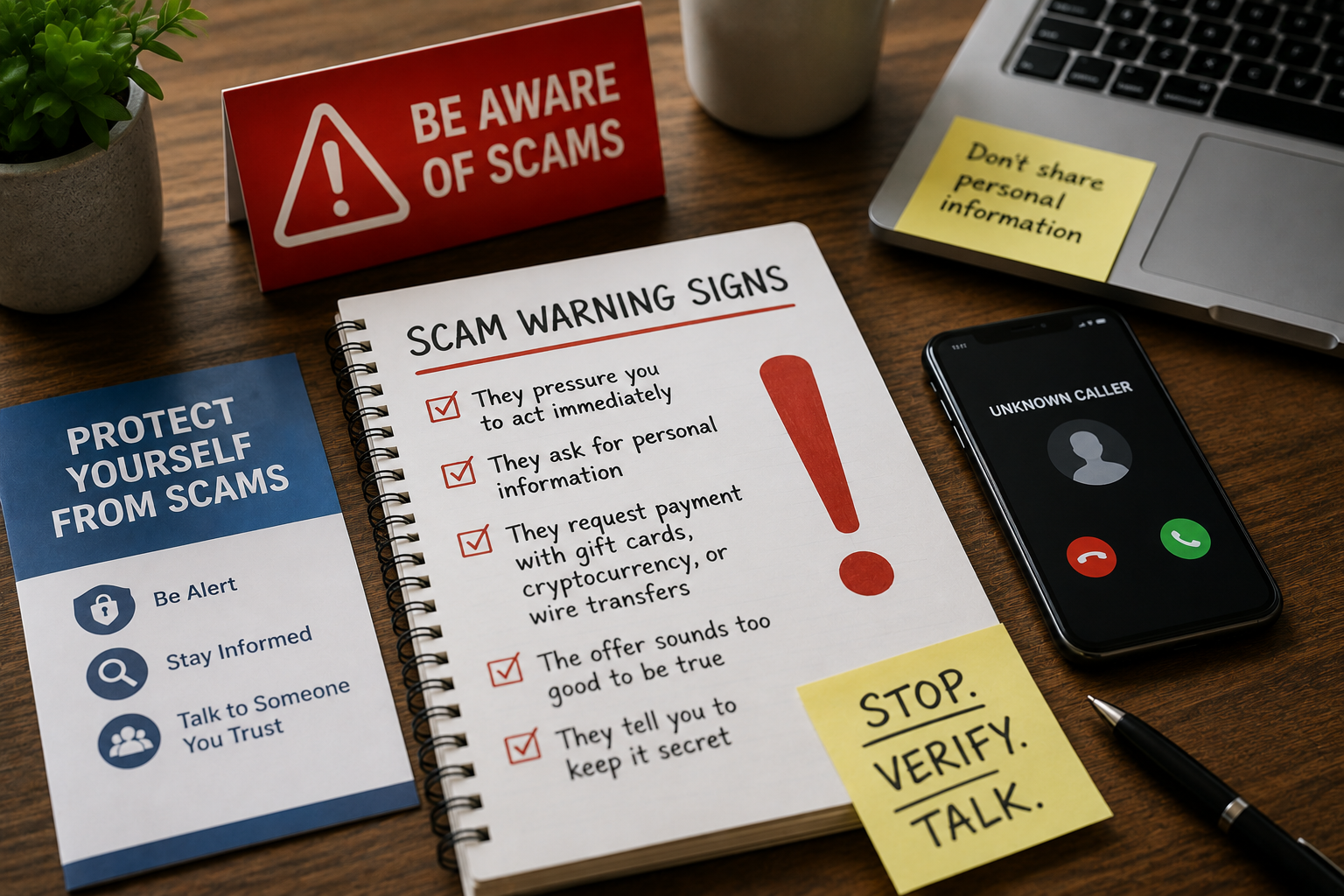

Scams targeting seniors are becoming more common every year. From Medicare scams and Social Security scams to phone calls, text messages, emails, and identity theft, criminals are constantly finding new ways to separate people from their money and personal information.
Before we get started, it's important to remember that anyone can fall for a scam. I've talked with smart, careful people who never thought it could happen to them. Scammers are getting more sophisticated every year, and sometimes all it takes is catching someone at the wrong moment. That's why knowing the warning signs is so important.
Warning Sign #1: They Want You to Act Immediately
One of the biggest scam warning signs is pressure.
Scammers often say:
- "You need to act today."
- "Your Medicare benefits are being canceled."
- "Your Social Security account has a problem."
- "This offer expires immediately."
Their goal is to make you panic and act before you have time to think.
Warning Sign #2: They Ask for Personal Information
Never give your Medicare number, Social Security number, banking information, passwords, or credit card information to someone who contacts you unexpectedly.
If you're unsure who you're talking to, hang up and call the company or organization directly using a phone number you know is legitimate.
Warning Sign #3: They Ask for Unusual Forms of Payment
Gift cards, cryptocurrency, and wire transfers are some of a scammer's favorite payment methods because they're difficult to trace and recover.
If someone asks you to pay this way, it's a major red flag.
Warning Sign #4: The Offer Sounds Too Good to Be True
Be cautious of anyone promising:
- Free money
- Guaranteed investment returns
- Large prizes or sweepstakes winnings
- Benefits that sound unrealistic
If it sounds too good to be true, it probably is.
Warning Sign #5: They Want You to Keep It Secret
Scammers often tell people not to discuss the situation with family members, friends, or trusted advisors.
A legitimate company will never ask you to keep a financial transaction secret.
How Seniors Can Protect Themselves
When in doubt, remember:
Stop. Verify. Talk.
- Stop before making a decision.
- Verify who you're dealing with.
- Talk to someone you trust before sharing information or sending money.
These three simple steps can prevent most scams.
Final Thoughts
The best protection against scams is awareness. Knowing the warning signs can help seniors avoid Medicare scams, Social Security fraud, identity theft, and other common scams targeting older adults.
If something feels off, trust your instincts. Slow down, ask questions, and verify the information before taking action.
And if you ever receive a Medicare-related call, letter, or offer that doesn't seem right, feel free to reach out. I'd much rather answer a quick question than see someone become the victim of a scam.