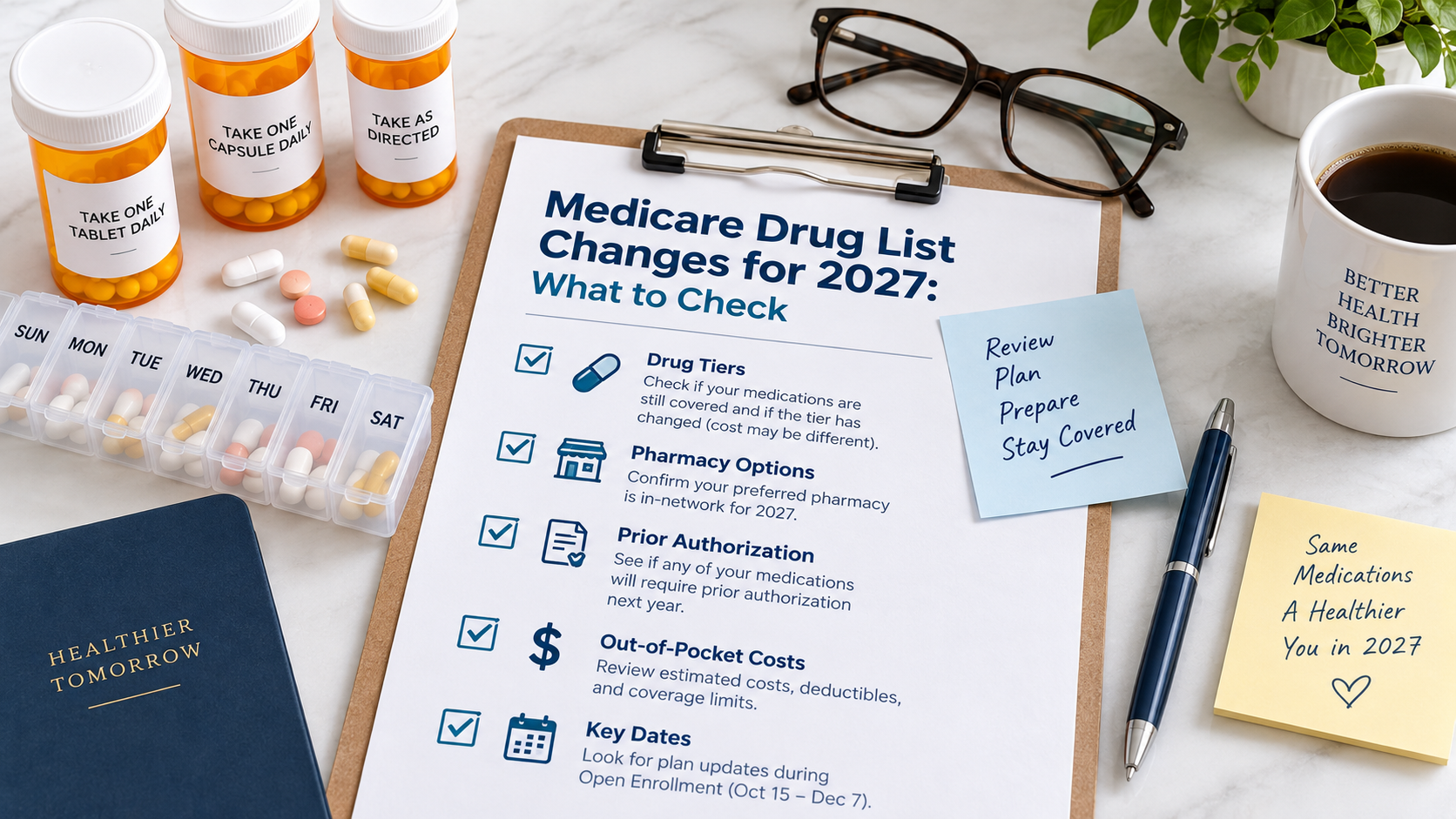

Prescription needs are personal, and Medicare Part D plans can differ in formularies, pharmacy networks, restrictions, and annual costs. A licensed agent can help you compare plans using your actual medication list instead of choosing by premium alone.
Use this guide to evaluate your options carefully and prepare for a useful conversation with a licensed insurance professional.
Build an accurate medication list
Record each prescription’s full name, strength, dosage, quantity, and refill frequency. Include insulin, specialty drugs, and medications taken only as needed.
Update the list before every annual review. Even one missing or incorrect medication can change a cost estimate or hide an important coverage restriction.
Understand formularies and drug tiers
A formulary is the plan’s list of covered drugs. Covered medications are assigned to tiers that influence cost sharing, and placement can differ by plan.
Check for prior authorization, step therapy, and quantity limits. If a drug is not covered, ask about alternatives, exceptions, and appeal procedures without assuming approval.
Compare pharmacies and annual cost
Many plans distinguish between standard and preferred network pharmacies. Prices may also differ between retail and mail-order options. Confirm that a convenient pharmacy participates at the expected level.
Compare estimated annual cost, not just the premium. Include deductibles, copayments or coinsurance, expected refill timing, and the possibility of medication changes.
Enrollment timing and late penalties
Most people first enroll when they become eligible for Medicare and do not have other creditable drug coverage. Going without creditable coverage may lead to a late-enrollment penalty.
Employer, union, retiree, VA, or other coverage can interact with Part D. Do not change existing coverage until you understand the consequences and receive appropriate guidance.
Questions for a Part D agent
Ask which standalone Part D and Medicare Advantage drug plans the agent represents. Request confirmation of every medication, pharmacy, restriction, and estimate used in the comparison.
Ask how the agent handles midyear formulary notices, denied prescriptions, and annual reviews. For a full view of available options, compare the results with Medicare.gov.
Frequently asked questions
Does the lowest-premium Part D plan cost the least?
Not always. Drug tiers, deductibles, pharmacy pricing, and restrictions can make another plan less expensive overall.
Can formularies change?
Plans may make permitted formulary changes and provide required notices. Review communications and ask about exceptions or alternatives.
Do I need Part D if I take no prescriptions?
Your decision should consider future needs and whether you have other creditable drug coverage, because delayed enrollment can have consequences.
What information does an agent need?
Provide medication names, dosages, quantities, refill frequency, preferred pharmacies, ZIP code, and any other drug coverage.
Find local Medicare help
Ready to speak with someone nearby? Browse the Agents by State directory or explore more educational resources in the Insurance Blog.
Important Medicare information
Medicare Agents Helpline is not affiliated with the U.S. government or the federal Medicare program. Agents may not offer every plan available in your area. For information about all of your options, visit Medicare.gov or call 1-800-MEDICARE.