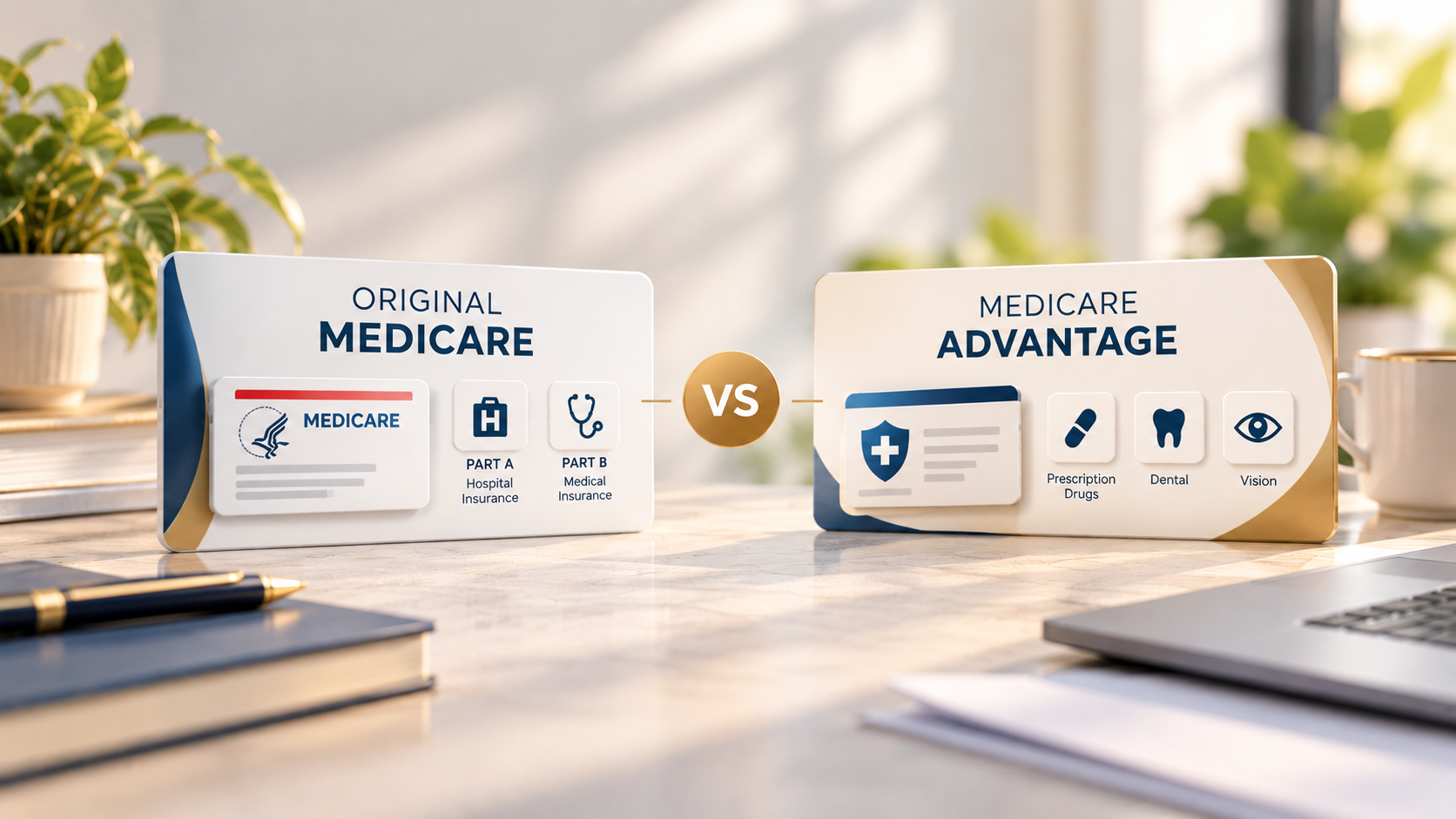

When you have Medicare, there are two main ways to receive your coverage: Original Medicare and Medicare Advantage (Part C). Both provide Medicare benefits, but they work differently when it comes to provider access, costs, prescription drugs, and additional benefits.
Understanding these differences can help you evaluate which option may better fit your healthcare needs and the way you prefer to receive care.
How Does Original Medicare Work?
Original Medicare is administered by the federal government and includes Part A (Hospital Insurance) and Part B (Medical Insurance).
In general, you can see any doctor or hospital in the United States that accepts Medicare, without being limited to a plan’s provider network. For most services, you also don’t need prior authorization.
Prescription drug coverage is not automatically included, but you can enroll separately in a Part D drug plan. You may also consider a Medigap policy to help with certain out-of-pocket costs that Original Medicare doesn’t cover.
One important point to keep in mind is that Original Medicare by itself does not have an annual out-of-pocket limit.
How Does Medicare Advantage Work?
Medicare Advantage, also known as Part C, is another way to receive your Medicare benefits through a private insurance company approved by Medicare.
These plans cover the medically necessary services that Original Medicare covers, but they may use provider networks and have different rules for accessing certain services. Depending on the plan, you may need to use in-network providers or get prior authorization for certain types of care.
Most Medicare Advantage plans include Part D prescription drug coverage, and some offer additional benefits that Original Medicare doesn’t cover, such as certain dental, vision, or hearing services.
Medicare Advantage plans also have an annual out-of-pocket limit for services covered under Parts A and B. Specific costs, provider networks, and benefits vary by plan.
What Differences Should You Consider?
Rather than asking which option is “better,” think about how each one would work for you.
- Your doctors: Do you want to continue seeing certain doctors, specialists, or using specific hospitals? With Original Medicare, you can generally use any provider that accepts Medicare. With Medicare Advantage, check the plan’s provider network.
- Your costs: Look beyond the monthly premium. Consider deductibles, copayments, coinsurance, and what you could pay when you actually need care.
- Your prescriptions: With Original Medicare, you can add a separate Part D plan, while most Medicare Advantage plans include prescription drug coverage. Either way, it’s important to check your medications and preferred pharmacies.
- Your healthcare needs: Consider how often you use healthcare services and whether you need specialized care or additional benefits such as dental, vision, or hearing.
- How you prefer to receive care: Think about whether having broader flexibility in choosing providers is important to you or whether you are comfortable receiving your benefits through a plan’s network and structure.
Making a Decision Based on Your Needs
Original Medicare and Medicare Advantage can cover many of the same healthcare needs, but the way you receive care and manage your costs can be different.
Before making a decision, look at the full picture rather than focusing on a single benefit, premium, or copay. Your doctors, prescriptions, healthcare needs, and personal preferences can all play a role in determining which option makes sense for your situation.
If you have questions or would like help understanding your Medicare coverage options, you can schedule an appointment with me here.


