
Introduction
Think about where your money goes every month. You've got rent, a car payment, utilities, and that one streaming service you keep swearing you’ll cancel. Then you have the insurance bills: health, auto, home... the whole responsible adult package. But there’s one bill many of us look at and think, "Do I really need this?" I’m talking about vision insurance. For years, I was right there with you, skipping it. It felt like an extra expense for a problem I didn't have. My eyesight was perfect, I didn't wear glasses, and paying a monthly premium for something I never used just felt like setting money on fire. I thought having vision insurance was leaving money on the table. It turns out, I was leaving way more on the table by not having it.
I always thought vision insurance was a total waste of money, especially since my eyesight was perfectly fine. But a single $15 check-up didn't just show me how much cash I was missing out on; it uncovered a hidden health risk I never saw coming. That one appointment completely flipped my perspective. It made me realize that vision insurance isn’t just about seeing clearly—it's about staying healthy. And the financial argument I was so proud of? It completely fell apart when I actually saw the numbers.
Section 1: The Problem & My Skepticism
Let's be real, the logic of skipping vision insurance feels pretty solid at first. Monthly premiums can be anywhere from $5 to maybe $35. It doesn’t sound like a lot, but hey, that’s another subscription, another little drain on the bank account. If you’ve got a family, that cost can go up. And for what? For years, my vision was stable. I could read road signs, stare at my computer all day, and I never got headaches. Why would I pay over a hundred bucks a year for a benefit I had zero plans to use?
That was my whole mindset. I was the president of the "I'll just pay out-of-pocket if I ever need it" club. It just seemed like the smarter financial move. The average cost of an eye exam without insurance can float anywhere from $100 to over $200, depending on where you live. To me, that still felt like a better deal than paying a premium every single month, year after year. I was playing the odds, and I was sure I was winning.
The other thing was, I just didn't get it. I thought eye exams were only for one thing: getting a glasses prescription. You go, they tell you if you're nearsighted, and you walk out with a script. Since I didn’t need glasses, I didn’t need an exam. Simple. And, as I’d soon find out, a dangerously wrong equation. This way of thinking is incredibly common. The CDC has pointed out that two of the major reasons people skip regular eye appointments are worries about cost and simply not knowing how important they are. I was firmly in both camps. Confident in my perfect vision and my brilliant financial strategy. I was about to find out just how wrong I was.
Section 2: The Turning Point - The $15 Check-Up
The thing that finally got me into an optometrist's chair wasn't blurry vision or seeing starbursts at night. It was my job's open enrollment period. I was scrolling through the benefits package and saw the vision plan. The premium was low, around $12 a month, and the copay for an annual exam was just $15. For the first time, I actually paused instead of instantly clicking "decline." I did some quick, back-of-the-napkin math. $12 a month is $144 a year. Still felt like a waste. But then I saw the other perks: a $150 allowance for frames and another for lenses.
Suddenly, an idea sparked. I'd been kind of wanting a pair of non-prescription sunglasses—good ones, with a real UV coating—and maybe even some of those blue light filtering computer glasses to help with eye strain. Without insurance, that combo could easily cost a few hundred bucks. So I thought, maybe... just maybe... I could game the system. I’d sign up for a year, pay the small premium, use the allowances to get some sweet, heavily discounted glasses, and then cancel. It felt like a genius-level hack.
So, I enrolled. A few weeks later, I booked my $15 check-up, feeling pretty smug about my master plan. I walked in expecting a quick, boring exam. The doctor had me read the eye chart—yep, still 20/20. Then came the part I'd never experienced: the comprehensive health check. The doctor used a machine to take a super high-resolution picture of my retina and looked deep into the back of my eyes.
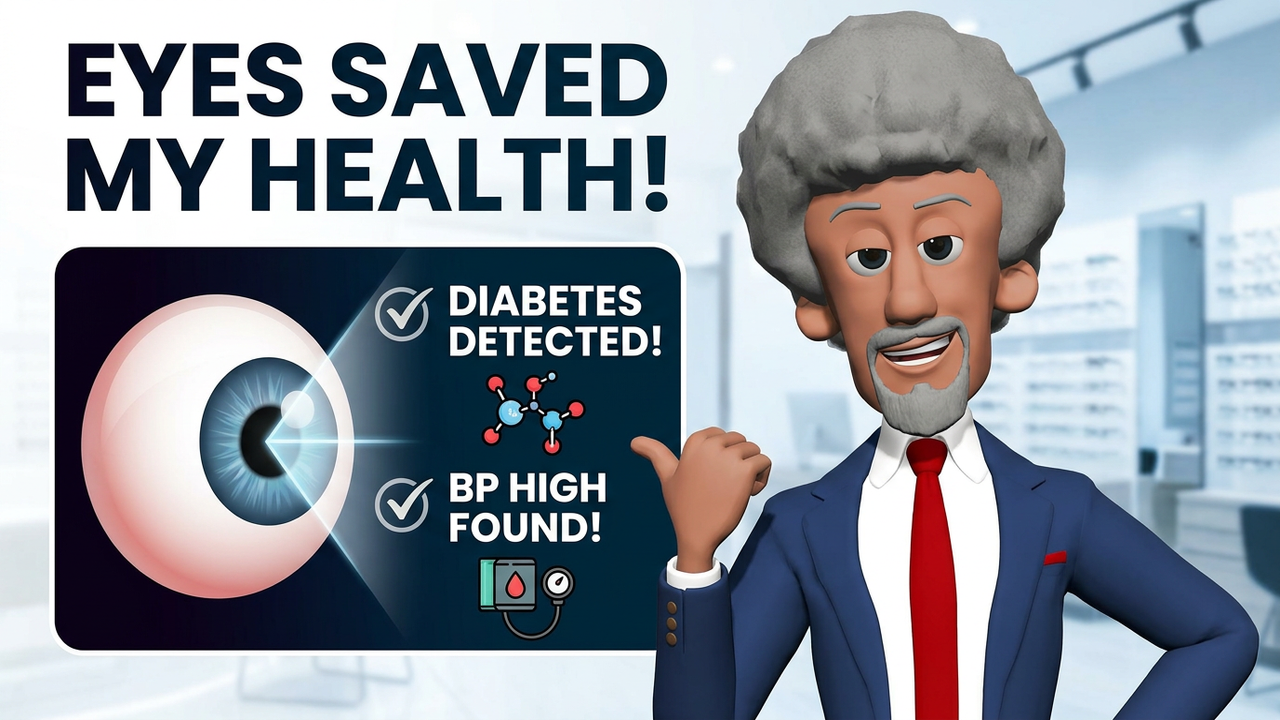
And that’s when the mood in the room changed. He pointed to the screen, showing me the tiny blood vessels. He explained that some of them showed subtle signs of stress, that they looked a little narrow. This, he told me, can be an early indicator of high blood pressure. He asked if it ran in my family. It did. He strongly advised me to see my regular doctor for a check-up soon. I was floored. I had no other symptoms. I felt totally fine. But there it was, in a routine eye exam I only booked to get cheap sunglasses, a potential warning for a serious health condition.
That was shock number one. Shock number two came when I went to pick out my frames. I found a pair of designer sunglasses I loved. Retail price: $220. My insurance gave me a $150 allowance. Then I grabbed a pair of computer glasses. The frames were another $180, and the blue-light lenses were about $100. Since this was a second pair, my plan gave me a 20% discount on the whole purchase.
I walked out of that appointment with two pairs of high-quality glasses and a critical piece of information about my health. The total out-of-pocket cost for *everything*, including the exam, was a tiny fraction of what it should have been. And the health warning? That was priceless. My little scheme to "game the system" had backfired spectacularly. The system had gamed *me*, and I was the one who won.
Section 3: The Solution - Breaking Down the Financial Value
That experience made me do the math I'd been avoiding, and let me tell you, the numbers are overwhelmingly in favor of having a vision plan, especially if you need glasses at all.
Let's break it down. A typical monthly premium for vision insurance is pretty low, often between $10 and $15. Let’s just use $15 a month, which is $180 for the year.
Now, let's look at the costs *without* insurance.
First, the exam. The national average for a comprehensive eye exam is around $170 to $200. Right there, a single exam without insurance can cost more than the entire year's worth of premiums. With insurance, that same exam is usually just a small copay, like $10 or $20. So, you're saving about $150 on the exam alone.
Next, glasses. Let's say you need a basic pair of single-vision glasses. Without insurance, the average cost for frames is about $230, and basic lenses are around $110. That's $340 out of pocket. An exam and a basic pair of glasses could easily set you back over $500.
Now, let's run it with insurance. You paid your $180 in premiums. You pay a $15 exam copay. Most vision plans give you an allowance for frames, usually around $150, and cover lenses after another small copay, maybe $25. Many plans also offer a 20% discount on any frame cost over your allowance. So if your frames are $230, your $150 allowance covers most of it. You owe the $80 difference, minus that 20% discount. That brings your frame cost to just $64. Add your $25 lens copay, your $15 exam copay, and your $180 premium. Your grand total for the year is about $284.
You've saved over $200 compared to paying out of pocket—and that's for one pair of basic glasses. If you need bifocals, progressive lenses, anti-glare coatings, or have a kid who breaks their glasses every year, the savings multiply like crazy. Families, especially, see huge benefits because kids' prescriptions change all the time, and insurance makes those updates affordable.
And hey, if this breakdown is making sense, do me a favor and hit that like button. It really helps the video get to more people who might be making the same financial mistake I was.
Section 4: More Than Money - The Hidden Health Benefits
The financial savings grab your attention, but the health benefits are what make vision insurance a non-negotiable part of your well-being. And my story isn't some weird one-off. Your eyes are literally a window to your overall health, giving a doctor a non-invasive look at your blood vessels, nerves, and connective tissues. An optometrist can be the first person to spot serious diseases, often before you feel a single symptom.
During a comprehensive eye exam, a doctor can see the tell-tale signs of diabetes by spotting leaky blood vessels in the retina. They can detect high blood pressure and high cholesterol by looking at the arteries and veins in the back of your eye. They can even find evidence that points to brain tumors, aneurysms, and autoimmune diseases like lupus or multiple sclerosis.
These aren't just far-fetched possibilities. Early detection can change your life. Catching diabetes early can help you prevent vision loss. Finding high blood pressure before it causes a stroke can literally save you. Vision insurance makes these yearly health screenings affordable. That low copay removes the financial hurdle that, as the CDC found, stops so many people from getting the care they desperately need.
This is also critical for age-related conditions. Diseases like glaucoma, the "silent thief of sight," and macular degeneration can sneak up on you, causing irreversible vision loss before you even notice a problem. Regular exams catch these diseases in their earliest, most treatable stages. If you have a family history of eye disease, this isn't just a good idea; it's absolutely essential.
Section 5: Addressing the Skeptics
I know some of you are still on the fence. I get it. I was your leader. So let's tackle the common objections head-on.
The biggest one is, "But I have perfect 20/20 vision." As my story proves, that’s *exactly* why you need an exam. The health screening has nothing to do with whether you need glasses. It's a proactive health check, and vision insurance is the cheapest, most effective way to get it done every year.
Another common thought is, "I'll just use a discount plan instead of insurance." It's important to know the difference. Discount plans are like a membership card—you pay a fee to get a percentage off. They're better than nothing, but they aren't insurance. Insurance uses copays and allowances that cover a much bigger chunk of the cost. If you know you'll need an exam and glasses each year, insurance almost always delivers way more value.
And what about the self-employed, the freelancers, the gig workers? For us, the argument is even stronger. Not only are the premiums often tax-deductible, but proactive eye care is an investment in your own productivity. Eye strain, uncorrected vision, and headaches can destroy your efficiency. A simple pair of computer glasses can be a total game-changer.
Conclusion
So, after my journey from total skeptic to true believer, here’s my final take: vision insurance is absolutely, 100% worth it. It’s not a luxury. It's not a frivolous extra. It’s a low-cost, high-value tool for both your financial health and your physical health.
For a small monthly premium—less than a few cups of fancy coffee—you get access to deeply discounted exams and eyewear, saving you hundreds of dollars. But more importantly, you get peace of mind. You get the security of knowing that a trained professional is checking for the earliest, most subtle signs of serious health problems.
My $15 check-up taught me a powerful lesson. I went in trying to save a little cash on sunglasses and walked out with a critical health warning and a totally new perspective on value. Don't make the same mistake I did for all those years. Don't wait for something to go wrong.
Check with your employer to see what vision plans they offer—open enrollment is the perfect time to sign up. If you're on your own or your job doesn't offer a plan, there are plenty of individual plans out there. I'll drop a link in the description to a resource where you can compare plans and find one that fits your budget.
Take it from someone who was wrong for years. Investing in your vision is investing in your overall health. And that’s a return you just can’t put a price on.
I enrolled and booked my $15 check-up, feeling pretty smug. I read the eye chart—still 20/20. Then came the comprehensive health check. The doctor took a high-resolution picture of my retina. And that’s when the mood changed. She pointed to the screen, showing me the tiny blood vessels in the back of my eyes. She explained that some showed subtle signs of stress, which can be an early indicator of high blood pressure. She advised me to see my regular doctor. I was floored. I had no other symptoms, but there was a potential warning for a serious health condition. That was shock number one. My scheme to "game the system" had backfired spectacularly. The system had gamed me, and I was the one who won.