Strengthening Tribal Health: The Benefits of Medicare Advantage for Tribal Medicare Members
For many American Indian and Alaska Native Medicare beneficiaries, access to dependable, affordable healthcare is essential—not only for individual well-being, but also for the strength of the entire tribal community. Medicare Advantage plans can play an important role by providing comprehensive health coverage while helping tribal healthcare systems generate revenue, coordinate care, and expand services.
Medicare Advantage, sometimes called Medicare Part C, is an alternative to Original Medicare. These plans are offered by private insurance companies approved by Medicare and must cover all medically necessary services covered by Medicare Parts A and B. Most Medicare Advantage plans also include Part D prescription drug coverage, and many provide additional benefits not generally covered by Original Medicare.
More Complete Benefits for Tribal Members
One of the most significant advantages of Medicare Advantage is the ability to combine hospital, medical, and often prescription drug coverage in one plan. This can make healthcare easier to understand and manage, particularly for members with multiple medical conditions or medications.
Depending on the plan and service area, additional benefits may include:
- Routine dental, vision, and hearing services
- Allowances for eligible over-the-counter health products
- Transportation to approved medical appointments
- Fitness and wellness programs
- Meal benefits following an eligible hospital stay
- In-home support and safety benefits
- Care-management programs for chronic conditions
Benefits, provider networks and costs vary considerably among plans. Members should verify that their medications, preferred physicians, hospitals, pharmacies and tribal healthcare providers can be used appropriately under a plan before enrolling.
Medicare Advantage plans also establish an annual limit on members’ out-of-pocket expenses for Medicare Part A and Part B services. Original Medicare does not have this type of annual limit unless the beneficiary has additional coverage. For tribal elders and other members living on fixed incomes, this protection can provide greater financial predictability.
Continued Access to Tribal Healthcare
Enrolling in Medicare or a Medicare Advantage plan does not eliminate a tribal member’s eligibility to receive care through the Indian Health Service, a tribal health program or an urban Indian health organization. CMS explains that American Indian and Alaska Native people enrolled in its programs may continue receiving services from their local Indian healthcare providers while also gaining access to other covered providers. CMS Medicare resources for American Indians and Alaska Natives
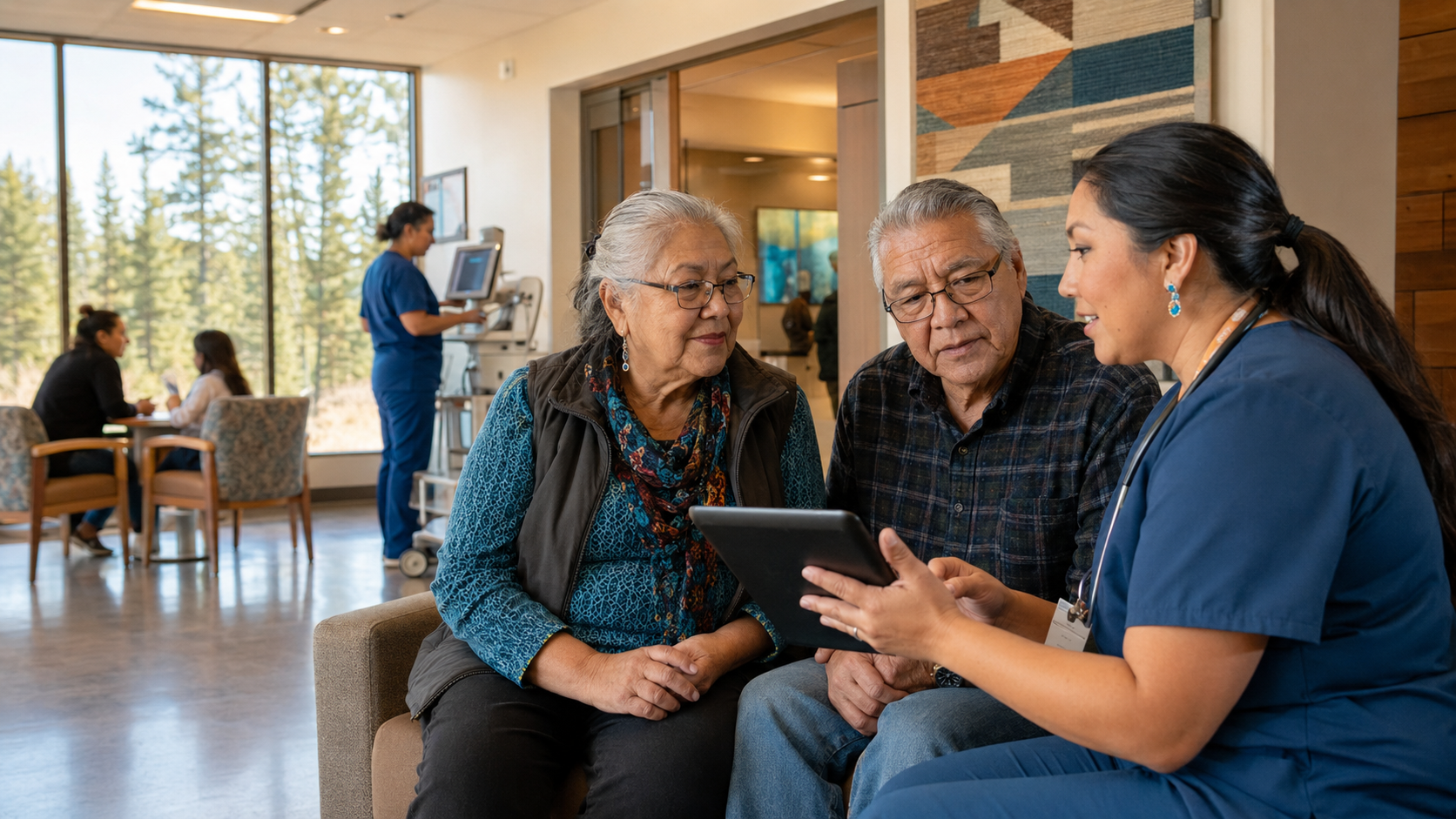
This combination can be especially valuable in rural communities. Tribal clinics may remain the member’s trusted source for primary care, wellness services and culturally responsive support, while the Medicare Advantage plan may provide access to specialists, hospitals and other services unavailable locally.
Some plans also offer chronic-care coordination for members managing diabetes, cardiovascular disease, kidney disease and other serious conditions. When care coordination is performed effectively and in cooperation with the tribal healthcare team, it can support earlier intervention, better medication management and more consistent follow-up care.
Supporting the Sustainability of Tribal Healthcare Systems
Medicare coverage is not simply an individual benefit. It can also serve as an important financial resource for the tribal healthcare system.
The Indian Health Care Improvement Act authorizes IHS and eligible tribal health programs to bill Medicare, Medicaid and other third-party payers for covered services provided to insured patients. According to IHS, revenue from third-party billing plays a major role in augmenting and enhancing healthcare services for American Indian and Alaska Native communities. IHS third-party revenue guidance
When a Medicare Advantage member receives covered care from a tribal healthcare facility and the facility can successfully bill the plan, that reimbursement can bring additional healthcare dollars into the community. These payments supplement federal appropriations; they do not replace the federal government’s trust and treaty responsibilities to provide healthcare to Native people.
Third-party revenue can help tribal facilities:
- Recruit and retain physicians, nurses, pharmacists and support staff
- Purchase medical equipment and diagnostic technology
- Expand behavioral health and substance-use treatment
- Support diabetes prevention and chronic-condition management
- Improve pharmacy, laboratory and imaging services
- Maintain buildings, technology and administrative systems
- Extend clinic hours or add new specialty services
IHS has reported that third-party revenue supports a substantial portion of facility operating costs and has helped facilities expand services such as specialty care, CT scans, MRI, mammography and ambulatory surgery. IHS revenue-generation report
This creates a positive cycle: members use their coverage at tribal facilities, facilities receive appropriate reimbursement, and those funds are reinvested in services that benefit the community. Stronger local services can reduce unnecessary travel, improve continuity of care and allow more healthcare decisions to remain under tribal leadership.
Choosing a Plan Carefully
Medicare Advantage is not automatically the best choice for every tribal member. Provider networks, prior-authorization requirements, referral rules, drug formularies, copayments and supplemental benefits differ among plans. A benefit that appears attractive may have restrictions or may not be available locally.
Before enrolling, members should consult a knowledgeable Medicare advisor, tribal benefits coordinator or health-program representative. The review should consider the member’s physicians, medications, pharmacy, preferred hospital, travel needs and eligibility for Medicaid or Medicare Extra Help.
When carefully selected and properly coordinated with tribal providers, Medicare Advantage can offer meaningful benefits to tribal Medicare members. It can improve access, provide additional financial protection and deliver services beyond Original Medicare. Just as importantly, appropriate use and billing of Medicare benefits can bring critical resources back into tribal healthcare systems—helping tribes build stronger, more sustainable and community-centered care for present and future generations.